Client results & program breakdown

Inside 1 Channel Away. The method, the people, the results.

1 Channel Away is Eddie Eizner's mentorship for building faceless YouTube channels with AI production workflows. It is aimed at working professionals who want a second asset rather than a side hustle they babysit forever, and a faceless channel is something that can eventually be sold. Everything on this site is on the record.

On the record

1 Channel Away client results

Every person below is a real, named client with a recorded interview on file. The wall underneath is the raw screenshot evidence they provided.

200+

Clients Coached

50M+

Views Generated

6 figs

Top Earner / mo

4.9★

Client Rating

The people

What they actually did

Watch the client interviews
KristiChiropractor · Italy
★★★★★

Tried it alone, failed, then it worked

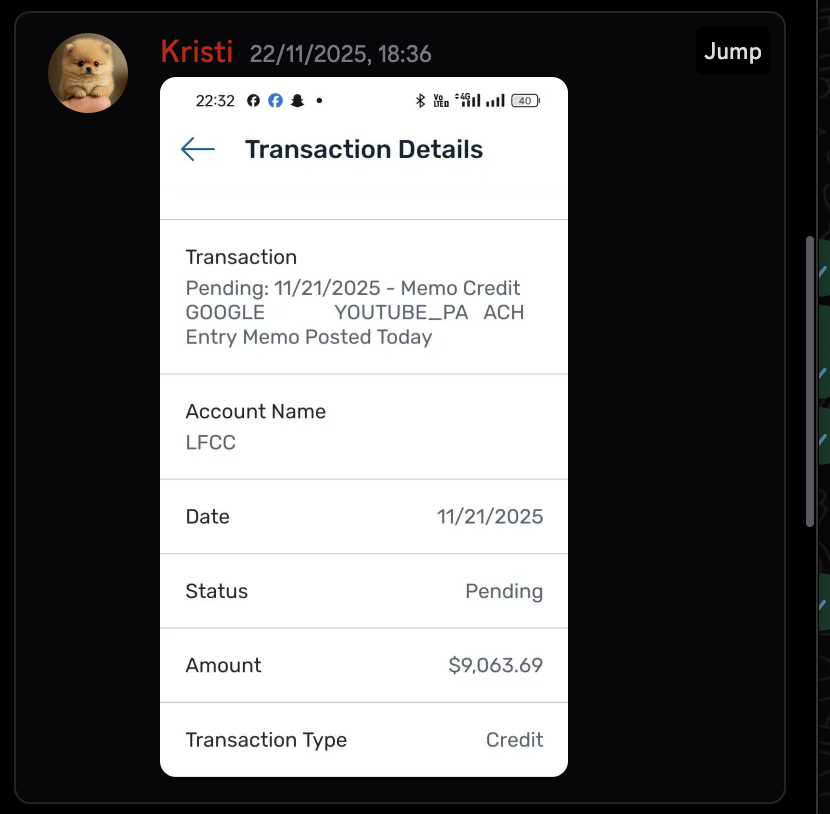
A practising chiropractor and a mom of two. COVID hit her practice hard. She had already tried YouTube on her own and it went nowhere. Inside the program she got to roughly $9K a month on the side, and took a vacation with the channels still earning while she was gone.

Kristi's faceless YouTube earnings screenshot, roughly $9,000 per month
Client interview on fileScreenshot on file
SpencerFormer real estate wholesaler
★★★★★

Hit the number, then made the call

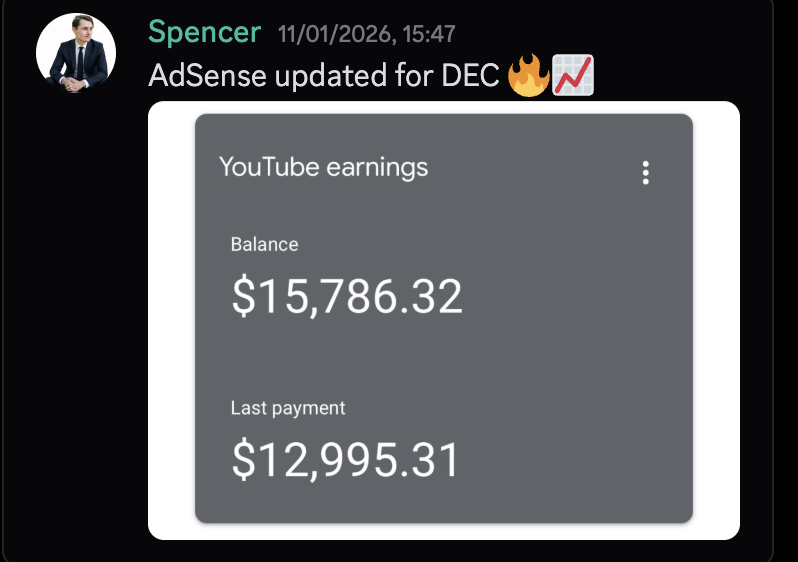
Came out of real estate wholesaling. Built to roughly $15K a month, and moved on from his previous work once the income was there, on his own timeline and his own terms.

Spencer's faceless YouTube earnings screenshot, roughly $15,000 per month
Client interview on fileScreenshot on file
MattMonetized in ~8 days
★★★★★

One video, about five million views

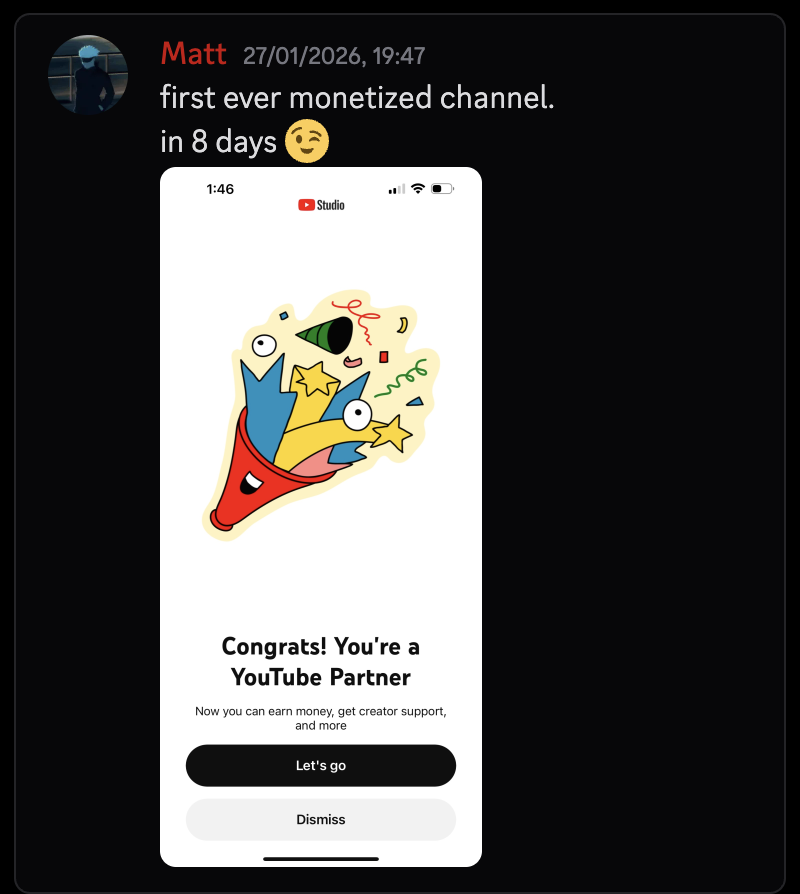
Monetized in roughly eight days. One of his videos hit around five million views and his first month came in near $23K. This is not the typical pace and Matt would tell you that himself, but it shows what the format is capable of when it lands.

Matt's first-month faceless YouTube earnings screenshot, near $23,000
Client interview on fileScreenshot on file
AnthonyStarted from a boat
★★★★★

Built it from wherever he was

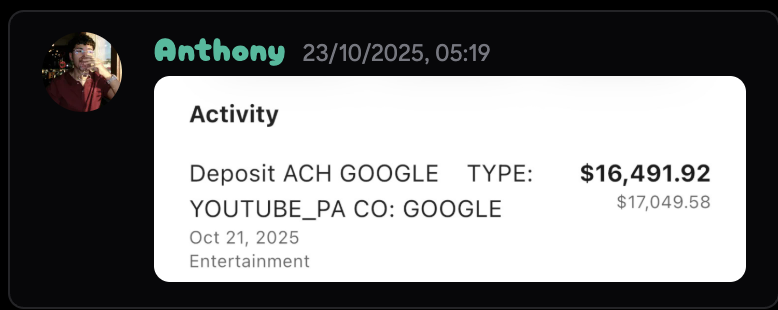
Started building from a boat and scaled to roughly $16K a month. The work travels, because the system does not need a studio or a schedule that stays still.

Anthony's faceless YouTube earnings screenshot, roughly $16,000 per month
Client interview on fileScreenshot on file
LiamPortfolio builder
★★★★★

Did not stop at one channel

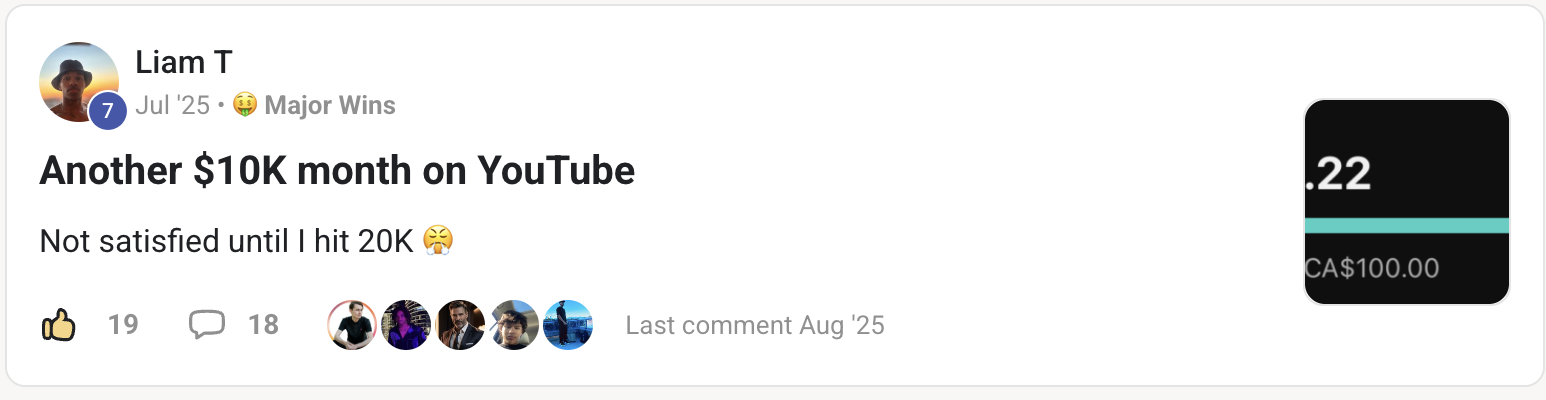
Built a portfolio of faceless channels past $10K a month and moved out of his parents' place on YouTube income. He is the clearest example that one channel is the floor, not the goal.

Liam's faceless YouTube channel portfolio earnings screenshot, over $10,000 per month
Client interview on fileScreenshot on file
Eddie VFather · building around family
★★★★★

Built it later in life, around a daughter

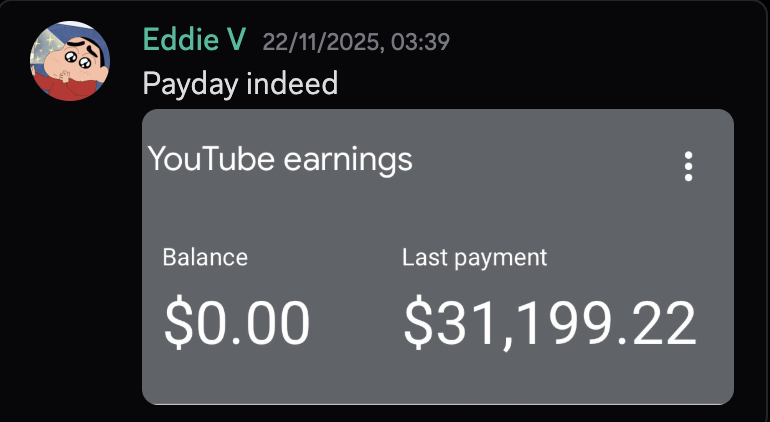
Older than most people who start this, with a daughter and a life already in motion. Got to roughly $30K a month. There is no age window on this and he is the proof.

Eddie V's faceless YouTube earnings screenshot, roughly $30,000 per month
Client interview on fileScreenshot on file

Every client shown here is a real person with a recorded interview on file, and the figures shown are supported by the screenshots on their card. Results described are individual outcomes, not averages, and not what anyone should expect. Nothing on this page is a promise of income. Read the earnings disclaimer.

The receipts

Client wins wall

55 client win screenshots · tap any tile to enlarge

Due diligence

1 Channel Away reviews: is it legit?

If you are searching the program name alongside words like review, legit, or scam, you are doing the right thing. This page is written for that search rather than around it. It covers how to verify the claims yourself, what the program is not, and who should not enrol.

The business model

How the faceless YouTube business model works

YouTube paid over one hundred billion dollars to creators in the last four years. That money goes to whoever holds attention, and the platform does not care whether you are on camera. It cares whether people watch. That gap is the whole opportunity, because AI now handles most of what used to take a full production team.

Advertisers fund it

Brands pay YouTube to reach viewers. YouTube splits that with the channel owner through AdSense. You are not selling anything to anyone. You hold attention and the platform pays out on it.

Faceless removes the ceiling

No face, no personality dependency. The channel is not you, it is a format. That is what makes it repeatable, delegable, and eventually transferable to someone else.

AI does the production

Scripts, voiceovers, thumbnails, research. The work that used to need a team runs on workflows now. That is why a person with a job can operate this in the hours they actually have.

It compounds while you sleep

A video uploaded last month can still be pulling views today. The library keeps working after you stop touching it, which is what separates an asset from a shift.

One channel is the floor

Once a format works, the same system points at another niche. Clients who get one running tend to build a portfolio, because the second one costs far less effort than the first.

Channels are sellable

A monetized channel with a track record is a business with a valuation, and channels trade on public marketplaces every day. That is the part most people never think about. See what YouTube channels sell for →

Source for the payout figure: YouTube's official Made on YouTube announcement, September 2025.

The 1 Channel Away method

The Bending Method explained

Most people pick a niche they like and hope it works. That is a coin flip. The Bending Method starts from YouTube formats that are already proven, then moves them somewhere nobody is competing.

Niche Bending

Find a format that is already working against hard criteria: how old the channel is, what it averages in views, and whether the format repeats. A young channel pulling serious views on a repeatable format means the format is doing the work, not the personality. Then bend that format into a different niche where nobody has taken it yet. You are not inventing. You are relocating something proven into open space.

Packaging Bending

Titles and thumbnails decide whether the video gets a chance. The packaging carries the same psychological structure that made the original format click, rebuilt for the new niche. This is where most channels quietly die, because the video was fine and nobody ever opened it.

AI Workflows

Once the format and the packaging are locked, production becomes a process you run rather than a thing you agonize over. Research, scripting, voice, thumbnails. This is the part that makes it survivable alongside a full-time job, and it is the part that lets one channel become several.

TubeGen Niche Finder

TubeGen's research tool. Surfaces channels and formats against the criteria above so you are not scrolling YouTube guessing. Six months included with the program.

TubeGen Thumbnail Generator

Builds packaging that carries the structure of what already works in the format you are bending. Six months included with the program.

180 days, in order

What the process actually looks like

Days 1 to 14 · Foundation

Goal: find your niche and set up the channel.

Onboarding call, then niche validation against three hard tests: proven demand, an RPM range worth the effort, and a format that repeats. This is the phase where most people who fail have already failed, because they picked a niche they personally liked instead of one the data pointed at. Then the channel itself, meaning branding, banner and description, and your first videos out the door.

Two to three hours a day.

Days 14 to 30 · First videos

Goal: upload your first videos and start collecting algorithm data.

Title and thumbnail first, script second, because if nobody clicks then nothing else about the video matters. Then production: script, voice, visuals, editing. The early videos are not meant to be perfect, they are meant to give the algorithm something to learn from. Getting to roughly ten videos is what starts the data flowing.

Days 30 to 90 · Optimization and monetization

Goal: hit the YouTube Partner Program requirements, 1,000 subscribers and 4,000 watch hours, and get your first payouts.

This is where consistency stops being advice and starts being the whole thing. Around 3% of channels ever cross the monetization line. Almost all of the ones that fail stopped uploading before they got there, or kept guessing instead of reading what the data was already telling them. This phase is reading retention, click-through and watch time, and changing what the numbers say to change.

One to two hours a day.

Days 90 to 180 · Scale

Goal: grow past the first milestone using one of three paths.

Double down on the channel that works, with more uploads, better formats and higher retention. Add a second channel, which costs a fraction of the first because you already know the process. Or move to the operator model, handing execution to someone else while you keep strategy and review.

Thirty to sixty minutes a day once an operator is in place.

This is the intended shape of the process, not a schedule anyone is held to and not a prediction of your results. Timelines vary widely. Some clients monetize in weeks, others take months, and some never do. See the earnings disclaimer.

Who runs this

Eddie Eizner, founder of 1 Channel Away

Eddie Eizner, founder of 1 Channel Away and TubeGen

Eddie was a nineteen year old lifeguard making around two thousand a month. He did not come into this with a network or a budget. He worked out what actually moves a faceless channel, built a system around it, and then kept building until the system held up without him watching it.

He founded TubeGen to handle the two parts of the process that eat the most time, niche research and thumbnails. 1 Channel Away is where he teaches the rest of it directly, because software alone does not tell you which format is worth bending or when a niche is not worth staying in.

He still coaches inside the program. That is the whole reason the guarantee works the way it does.

Founder of TubeGen, the AI research and packaging software used inside the program
Built the Bending Method from his own channels before teaching it to anyone
Runs coaching personally rather than handing clients to a support queue
Employs a full-time niche researcher who validates niches for Elite clients

Client interviews

1 Channel Away client interviews

Full unedited conversations. What they did before, what went wrong, what actually changed. No highlight reels.

Full interview$15K/mo

Liam: why he built a portfolio

College dropout at 18. The decision to go past one channel, what the second and third cost him in effort, and how the portfolio changed the math.

Full interview$54K/mo

Eddie V: starting with a family already in motion

$3,000 to $54,000 in under 60 days. Building around a daughter and an existing life, and why starting later was not the disadvantage he expected.

Full interview$5K/mo

Colby: running it alongside a trading desk

Full-time trader who built to $5K/mo on the side. What the workflow looks like when your day is already spoken for.

Full interview$15K/mo

Spencer: from wholesaling to walking away

$0 to $15,000/mo faceless. How he decided what number he needed before he touched his notice, and what the build looked like month to month.

Full interview$9K/mo

Kristi: a practice, two kids, and two channels

Why her first solo attempt failed, what she changed, and what it looks like to go on vacation while the channels keep earning.

Full interview$16.9K/mo

Anthony: building it from a boat

Car rental job to $16K+/mo. What it takes to run the workflow with no fixed base, and how he scaled once the first format proved out.

Full interview$100K+/mo

Gavin: four channels in eighteen months

Six figures a month across a portfolio built in a year and a half. The clearest case for why one channel is the floor.

Full interview$70K/mo

Anthony: one channel, one fast decision

A single channel and a decision made faster than almost anyone else's. What he saw in the first fortnight that made the call obvious.

Results described in these interviews are individual outcomes, not averages, and not what anyone should expect. Nothing here is a promise of income. Read the earnings disclaimer.

Straight answers

1 Channel Away FAQ

It is a performance guarantee, not a refund. If you complete the required work and have not reached $5,000 within 180 days, Eddie keeps coaching you at no additional cost until you get there. A refund hands your money back and walks away. This does the opposite, because the coaching continues until the channel has done what it was built to do.

To qualify you do four things: pick and validate a niche with your coach, upload at least 30 videos inside the 180 days, show up for your coaching calls, and follow the SOPs. That is the bar. The exact terms are in the client agreement you read before you sign anything, and that contract governs.

Yes, all three are the same program. The brand is written 1 Channel Away, plenty of people spell it out as One Channel Away, and because the domain is 1channelaway.io the run-together form shows up as well. The company is 1 Channel Away LLC and the founder is Eddie Eizner. There is no separate or competing program trading under the spelled-out name, so if you found this through any of those spellings you are in the right place.

Pricing depends on the tier and gets covered on the call, because the tiers differ in how much coaching and niche research you get. What is worth knowing before you apply is the shape of it: this is a build that costs money before it makes any, between the program itself and production spend. If a few hundred a month in production would have you holding your breath, this is not the right moment, and the call will tell you that rather than sell around it.

Check it rather than take our word for it. Every client on the results page is a named person with a recorded interview you can watch in full, not a testimonial card with a stock photo. The wins wall is raw screenshots. Eddie's own channels and socials are public. The guarantee conditions are written into the contract you read before you sign, not described on a sales page and forgotten. There is a longer version of this on the reviews and due diligence page, including who should not enrol. If something here does not hold up, tell us and we will check it against the source.

He started as a nineteen year old lifeguard making about two thousand a month, built faceless channels until the system worked without him watching it, and founded TubeGen to handle the two heaviest parts of the process. He teaches the program himself rather than handing clients to a support queue. His full background is here, and his YouTube, Instagram and X are linked on that page if you want to look at his work before you talk to anyone.

No. The model is built around faceless channels. AI generates the voiceover, AI generates the visuals, AI handles the thumbnails. Your face is never on screen and your voice is never in the video, which is also what makes the channel manageable from anywhere in the world and transferable to someone else later.

Most clients start with none. Kristi was a chiropractor, Spencer came out of real estate, Anthony was working a car rental job. Nobody arrived knowing how to build a faceless channel. What matters is whether you follow the criteria instead of your own taste, because the people who struggle are usually the ones picking a niche they personally like rather than one the numbers point at.

Usually one of three things. People trying it alone are stitching together ten different tools, guessing at niches with no data behind the choice, and burning $200 to $300 a video before they know whether the format works. On top of that they are picking unreliable freelancers, getting inconsistent quality, and landing in a niche with terrible RPM.

The bigger issue is that even people using AI today still get stuck, because they do not know what to look for. Wrong RPM range. Thumbnails that do not pass the walk-away test. Hooks that lose viewers in the first fifteen seconds. Niches that look untapped and are actually dead. You cannot fix what you have never seen working, which is the difference between doing it alone and having someone in it with you.

Setup, first two weeks: two to three hours a day to get the channel up and your first videos out.

Active phase, months one to three: one to two hours a day, mostly reviewing AI-generated scripts, approving thumbnails, and uploading.

Scale phase, month four on: as little as thirty to sixty minutes a day once an operator is in place. Your role becomes strategy and review rather than execution.

For reference, Spencer manages his channels in one to two hours a day, and Eddie V built his operation while still holding a full-time job.

That is who the program is built for. Clients here are working professionals with stable income who want a second asset. The AI workflows exist because the work has to fit into evenings and weekends, not replace them.

Clients typically hit the monetization threshold, which is 1,000 subscribers and 4,000 watch hours, within thirty to ninety days on their first channel. Matt is the fastest we have seen at eight days. Spencer took five months on his first, then a fraction of that on his second and third once he understood the system. Both are real and both are on this site, which should tell you the range is wide.

YouTube has paid over $100 billion to creators in the last four years and that number keeps growing, because TV viewership is still moving to YouTube. There are billions of viewers on the platform every day, and one channel doing 500,000 views a month is taking a rounding error of the total volume.

The opportunity is not finding a niche with zero competition, because that usually means no demand. It is executing better than the channels already there. The framework is built to find niches with proven demand and underwhelming execution.

Not at the start. You are building an asset, and building takes work. What compounds is the library. Videos uploaded months ago keep pulling views, and once the workflows are handed off the operation needs far less of you than it did in month one.

Sometimes, and it matters less than people think. The idea that AI content only works if nobody notices is already outdated. YouTube makes money from AI-assisted content because people watch it, and while they watch, they see ads.

What decides whether someone keeps watching is not whether AI touched the video, it is whether the video is good. If it is a topic they care about, the hook lands, and it holds their attention, plenty of people can tell and keep watching anyway. Low-quality AI shows the difference. High-quality AI does not, and that is what the system is built to produce.

There is no sign of it, and it helps to see why. YouTube is investing heavily in its own AI tools. A company spending that much on AI has little interest in banning creators for using it. What YouTube removes is low-quality, spammy, reused content, and it was removing that long before AI existed.

What changed is volume, not the standard. AI made it easy for anyone to flood the platform with junk, so there is more low-quality content to catch. The bar did not move, the amount of material under it did. High-quality content and sound strategy worked before AI and still work now. The system is built around what the algorithm rewards: retention, click-through, and watch time.

That said, building on someone else's platform is a real risk and you should treat it as one. YouTube can change its policies at any time. Our earnings disclaimer covers this honestly.

Yes. Monetized channels are bought and sold on public marketplaces, commonly at a multiple of average monthly net profit. A faceless channel is more sellable than a personality-led one, because nothing generating the revenue is tied to a specific person. The full breakdown is here, including what the multiples look like and why monetized channels are scarce.

The underlying thing is not AI, it is attention. Advertisers have paid for attention on video for as long as video has existed, and YouTube has been paying out on it for close to two decades. AI changed who can produce at that level, not whether the demand exists. The tools inside the workflow will keep changing, and the program updates as they do. What does not change is that a monetized channel with a track record is an asset with a valuation, which is a different thing from a trend you ride.

Next step

Apply to 1 Channel Away

The application takes a few minutes. It exists because this only works for people building a long-term asset, and it is a poor fit for anyone who needs money this month. If it fits, you book a call and Eddie's team walks through your situation, the tiers, and whether the timing makes sense for you.

Form not loading? Open it in a new tab →

Applying does not obligate you to anything, and it is not a purchase. 1 Channel Away is an education and coaching program, not an investment offering.

Get in touch

Contact 1 Channel Away

General enquiries

Questions about the program, the tiers, or anything on this site.

[email protected]

Existing clients

Already inside the program? Use your community channel or your coaching chat. That is the fastest route to Eddie.

Contact client support →

Media and partnerships

Press, podcasts, or collaboration requests.

[email protected]

Report a claim

If anything on this site looks inaccurate to you, tell us and we will check it against the source.

Flag it →

The part nobody thinks about

Can you actually sell a YouTube channel?

Yes. Channels get bought and sold every day, on public marketplaces, at prices anyone can look up. This is the difference between an income stream and an asset, and it is the reason the whole model is built the way it is.

Legal

Privacy policy

Last updated 17 July 2026

Legal

Terms of service

Last updated 17 July 2026

Legal

Earnings disclaimer

Last updated 17 July 2026

Legal

SMS terms

Last updated 17 July 2026